



A Comprehensive Technical Guide to Breather Valves
In high-integrity chemical storage and process vessels, a storage tank is a dynamic system. As liquid levels fluctuate and ambient temperatures shift, the internal vapor space expands and contracts. This phenomenon—known as “thermal breathing” and “liquid movement”—can create internal pressures or vacuums that exceed the tank’s structural design limits.
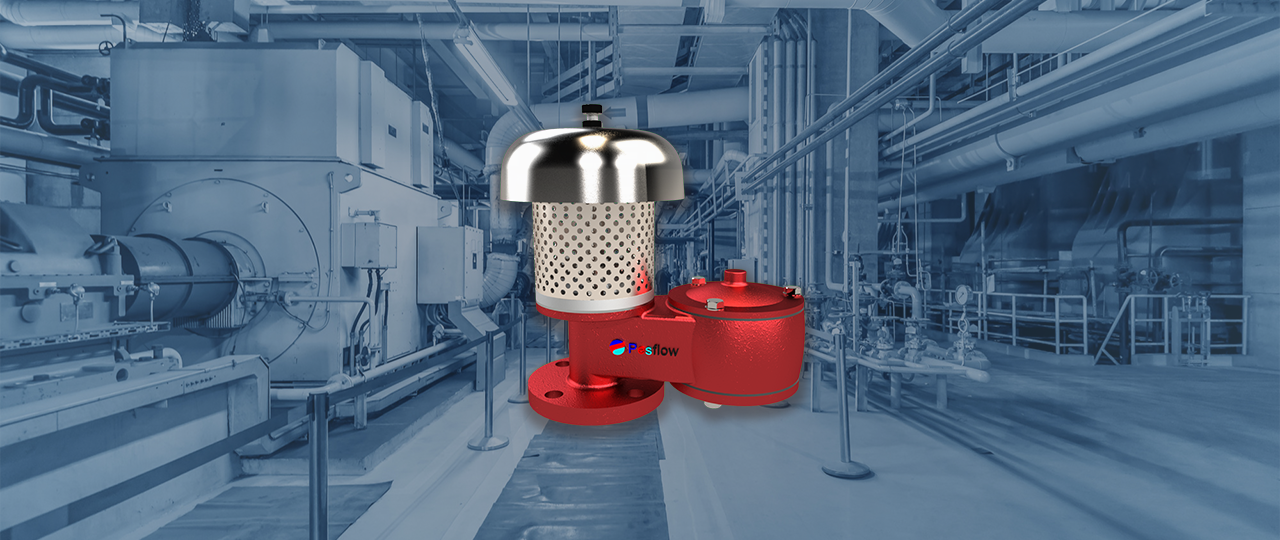
At Perfect Engineering Services, we provide high-precision Breather Valves (Pressure/Vacuum Relief Valves) designed to manage these shifts with minimal product loss and maximum safety.
The Engineering Behind "Breathing"
A Breather Valve must be sized based on API 2000 standards, considering two primary factors:
Non-Thermal Movement: The displacement of air/vapor caused by filling or emptying the tank.
Thermal Movement: The expansion or contraction of vapors caused by external temperature changes.
Failure to accurately calculate these rates can lead to “simmering” (premature leaking) or, in worst-case scenarios, tank rupture or implosion.
Technical Classification of Breather Valves
1. Conventional Pressure & Vacuum (P&V) Relief Valves
These are the workhorses of tank safety. Utilizing weight-loaded or spring-loaded pallets, these valves remain closed until the internal pressure reaches the “cracking pressure.”
Technical Edge: Our valves feature air-cushioned pallets with FEP/PTFE diaphragms to ensure a “tight” seal. This minimizes “dead band” (the difference between set pressure and reseal pressure), significantly reducing Volatile Organic Compound (VOC) emissions.
2. Breather Valve cum Flame Arrester
For tanks containing Group IIA, IIB, or IIC vapors, pressure relief must be coupled with flame mitigation.
The Assembly: This unit mounts a PVRV directly onto a flame arrester bank.
Quenching Mechanism: It utilizes the Maximum Experimental Safe Gap (MESG) principle. If vented vapors ignite, the corrugated matrix element absorbs the heat, dropping the temperature below the ignition point before the flame front can enter the tank
3. Inbuilt Flame Arrester Type
A more compact engineering solution, the inbuilt type integrates the flame-quenching element within the valve body itself.
Advantage: This reduces the overall profile and weight of the assembly. It is particularly effective for systems where low-pressure drops are required, as the integrated flow path is optimized for high-capacity venting.
4. Pressure & Vacuum – Pipe-Away Type
In applications involving toxic or hazardous vapors, “venting to atmosphere” is not an option.
Engineering Detail: The “out-breathing” (pressure) port is flanged for connection to a header system.
Back-Pressure Consideration: These valves are specially calibrated to function accurately even when there is back-pressure within the discharge piping, ensuring they don’t stay closed during a critical pressure surge.
5. Pressure-Only or Vacuum-Only Type
Some vessels are designed to be “self-venting” in one direction but require protection in another.
Pressure Type: Protects against over-pressurization during high-rate filling or chemical reactions.
Vacuum Type: Protects against atmospheric crushing during high-rate discharge or rapid cooling (thermal contraction).
Performance Specifications & Material Integrity
To ensure long-term reliability in aggressive chemical environments, Perfect Engineering Services adheres to stringent metallurgical and design standards:
Seat and Pallet Technology: We utilize “Self-aligning” pallets to ensure the valve reseals perfectly after every venting cycle. Soft-seated options (PTFE/Viton) are available for “Bubble Tight” requirements.
Material Selection:
Body: A216 Gr. WCB (Carbon Steel), SS 304, SS 316, or SS 316Ti for enhanced temperature resistance.
Internal Trim: SS 316 as standard to prevent “stiction” caused by corrosion.
Coatings: Optional Fluoropolymer coatings for extreme chemical resistance.
Testing & Compliance: All valves are tested for set pressure and leak rates in accordance with API 2000 7th Edition and ISO 16852.
Why Partner with Perfect Engineering Services?
Selecting a breather valve is a calculation of safety and economy. A valve that leaks at 90% of set pressure results in massive product loss and a valve that fails to open results in disaster.
Our engineering team assists in the precise sizing of PVRVs to ensure your “cracking” and “full-lift” pressures are perfectly aligned with your tank’s MAWP (Maximum Allowable Working Pressure).
Protect your assets and stay compliant with the best in pressure management.
Visit perfectengineeringservices.co.in or contact our experts for a technical consultation today.