



Integrated Tank Protection - Technical Analysis of Breather Valves and Flame Arresters
- Home
- Blog
Integrated Tank Protection - Technical Analysis of Breather Valves and Flame Arresters
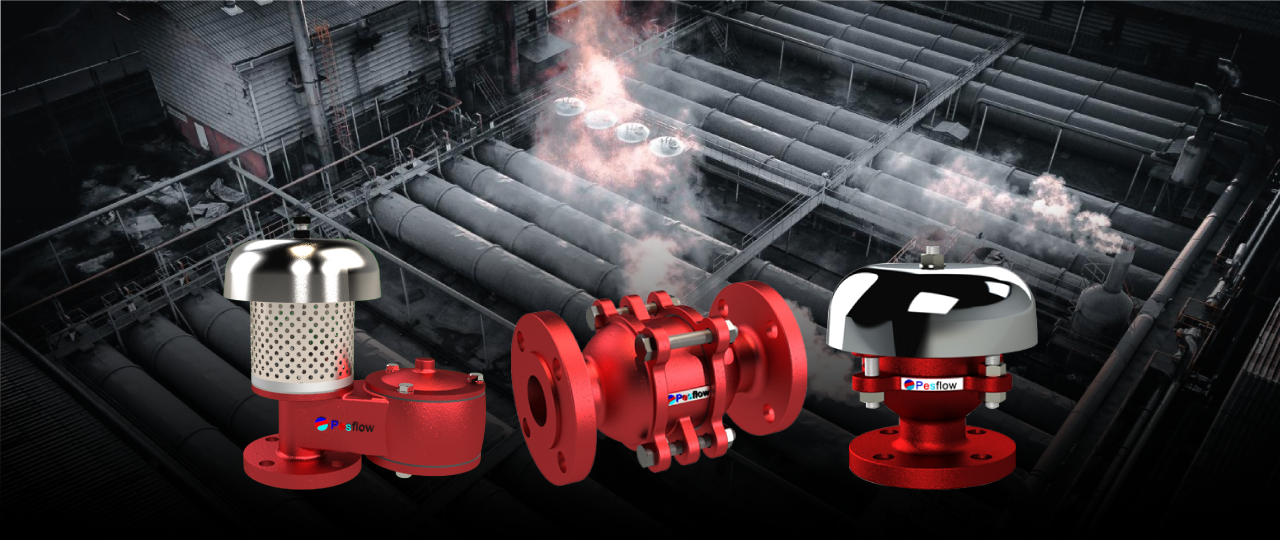
In industrial storage tank management, protecting structural integrity while mitigating fire risks requires a sophisticated atmospheric vent system. Perfect Engineering Services specializes in the provision of integrated safety solutions, specifically the combined application of Pressure Vacuum Relief Valves (PVRV) and Flame Arresters.
This technical guide explains the specifications, material grades, and operational necessity of these critical safety components.
1. The Engineering Logic of Breather Valves (PVRVs)
A Breather Valve is a high-precision relief device designed to manage the internal pressure of a storage tank. As liquid is pumped in or out, or as temperatures fluctuate (thermal breathing), the valve prevents two catastrophic scenarios:
Overpressure: Prevents the tank roof from rupturing during “out-breathing.”
Vacuum Implosion: Prevents the tank from collapsing during “in-breathing.”
Technical Types:
Weight Loaded (Dead Weight): Utilized for low-pressure applications where set pressures are relatively constant.
Spring Loaded: Engineered for higher set-pressure requirements and applications where vibration or motion might affect weight-loaded pallets.
2. The Synergy: Combined Valve and Flame Arrester Units
While a Breather Valve manages pressure, it inherently creates a pathway for atmospheric air to enter or vapors to exit. This creates a risk of an external ignition source traveling back into the tank.
By integrating a Flame Arrester with the Breather Valve, the system provides a dual-function safety barrier:
Vapor Loss Control: The PVRV remains closed until the set pressure is reached, significantly reducing product evaporation loss.
Flashback Prevention: The Flame Arrester element (Crimped Ribbon SS316L) quenches any flame front trying to enter through the valve during a vacuum relief cycle.
3. Detailed Technical Specifications
To ensure seamless integration into your facility’s piping and instrumentation diagrams (P&ID), Perfect Engineering Services offers the following specification range:
Size Range:
Standard Sizes: 1” (DN 25) to 12” (DN 300).
High-Capacity Lines: Custom configurations up to 24″ for large-scale vapor recovery headers.
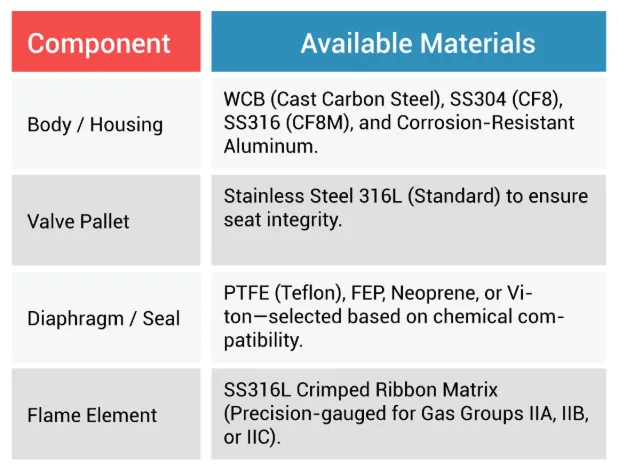
Material Specifications:
Operational Parameters:
Pressure Settings: Calibrated from 2 mbar to 1000 mbar (Standard range).
Vacuum Settings: Calibrated from 2 mbar to 500 mbar.
Flange Connection: ANSI B16.5 Class 150#, DIN, or JIS standards to ensure leak-proof installation.
4. Selection Criteria: MESG and Vapor Groups
The effectiveness of the integrated unit depends on the Maximum Experimental Safe Gap (MESG). Our engineering team assists in selecting the correct element based on the stored medium:
Group IIA / D: Standard hydrocarbons like Gasoline or Crude Oil.
Group IIB3 / C: Industrial chemicals like Ethylene or Diethyl Ether.
Group IIC / B: High-risk vapors like Hydrogen or Carbon Disulfide.
What makes Perfect Engineering Services the preferred partner for complex industrial setups?
It’s our obsession with the details.
Custom-Calibrated MESG: We do not offer generic solutions. Our elements are precision-crimped to the exact gap required for your specific gas group and process conditions.
Metallurgical Integrity: From Hastelloy to SS316L, we utilize certified, high-grade materials capable of withstanding aggressive chemical environments and extreme thermal cycles.
Compliance-Ready: Our safety devices are designed in accordance with API 2000, ISO 16852, and EN 12874 standards, ensuring your facility meets all regulatory and insurance requirements.
Secure Your Industrial Infrastructure
Mitigate operational hazards and maintain system integrity by integrating our certified atmospheric venting technology into your storage infrastructure.
Perfect Engineering Services delivers high-specification Breather Valves and Flame Arresters designed to meet the rigorous safety demands of the oil, gas, and chemical processing sectors.
[Request a technical assessment from our engineering department today.]